- Brand Matters by Lento Agency
- Posts
- The Forgotten Sense That's Costing You Sales
The Forgotten Sense That's Costing You Sales
Why the music playing in your store right now is either making you money or losing it—and you probably don't even know which.

Jair Lucena
December 05, 2025 • Estimated Reading Time: 17 minutes

Hi there,
Welcome back to another week of Brand Matters.
As Black Friday wraps up and we dive deeper into the holiday shopping season, I've been spending time in stores observing how brands create their in-store experiences. And I've noticed something fascinating: while companies obsess over every visual detail—the lighting, the displays, the packaging—most are completely ignoring the one sense that could make or break a sale. Sound.
This week, we're exploring the forgotten sense that's costing brands sales—why sound is the most underutilized brand asset, how tempo controls spending behavior, and why most companies are treating their sonic identity like wallpaper when it should be a strategic weapon.
Also in today's issue:
Ad of the Week: Spotify Wrapped ditches AI and goes analog—bringing back mixtape culture after users revolted
Brand Watch: MassiveMusic gets a rebrand that makes sound visible through generative motion and pulsing gradients
Black Friday breaks online records as shoppers chase personalized deals and tech bargains
Neuroscience-backed marketing moves from theory to practice, outperforming traditional creative
Let’s get started.

Can you scale without chaos?

It's peak season, so volume's about to spike. Most teams either hire temps (expensive) or burn out their people (worse). See what smarter teams do: let AI handle predictable volume so your humans stay great.
Thank you for supporting our sponsors, who keep this newsletter free.
I Still Remember That Ice Cream Truck Song From 30 Years Ago
After 30 years, I still remember the ice cream truck song from my childhood. In Bogota it was “Für Elise” by Beethoven. That tinny, looping melody cutting through summer air. Every time I hear those notes, I'm instantly transported back: the faces of friends I've lost touch with, the warmth of Sunday afternoons, every detail of that park.
That's the power of music. It triggers memories from decades ago and transports us into deep states of consciousness. Music activates the amygdala and hippocampus—the brain regions critical for emotional memory. We listen, we record, we recall. Sometimes with just a few notes.
You're hit with 4,000 to 10,000 branded messages every week. Logos. Slogans. Ads screaming for attention. You'll remember maybe three of them.
Music? That bypasses the queue entirely. Straight to the vault.
As we exit Black Friday and enter Christmas season, we go into the detail of subconscious force of music in shopping behavior, shaping everything from our sense of time to purchase decisions. It's about the brands using it to create genuine connection—and the ones bleeding customers because they got it catastrophically wrong.
Why Music Sticks (And Why That Matters)
You remember the McDonald's jingle but not your Wi-Fi password. That's dopamine at work. Your brain treats catchy tunes like chocolate or TikTok—one hit and it's locked in for decades. I have written many times before how much I love a good jingle.
Music triggers memory faster than almost anything else. That's why legendary advertisers went all-in on jingles—simple, repetitive melodies designed to stick. You can't shake them no matter how hard you try.
Intel's five-note bong. Netflix's ta-dum. Bet you just heard them in your head.
Most brands treat music like wallpaper. Background noise to fill silence. But here's the thing: you obsess over what customers see, touch, smell, even taste. Sound? That's treated like furniture.
And it's killing you.
Tempo: The Invisible Hand on Your Wallet
Music is all about timing. Whoever controls the tempo controls the mood. Play Metallica at a romantic dinner and watch the chaos unfold.
Back in 1982, Ronald Milliman ran a study that should've changed retail forever. Supermarkets playing slow music saw customers spend 34% more time in the store—and sales jumped 32%.
Fast music raises your heart rate. Slow music chills you out, makes the world feel relaxed. Tempo is so powerful it can actually warp your sense of time. Slow music makes you lose track of how long you've been wandering the aisles—suddenly, you've spent an hour in the store and your cart is mysteriously full.
Yet most brands still don't get this. Walk into any struggling retail space and I'll bet the music is fighting the brand's intention. They want you to linger but they're blasting Top 40 garbage that scream "get out." Or they want quick turnover but they're playing dinner jazz that makes everyone settle in for the night. The brands that win? They know exactly what tempo they need—and they commit to it hard.
Fast Fashion vs. Luxury: Why Zara Makes You Rush and Gucci Makes You Linger
Step into Zara and you'll be greeted by a playlist that feels like a youth club—fast beats, energetic pop, tempo that makes you want to move. Fast fashion brands use upbeat music to create excitement and urgency. Higher BPM makes you shop faster and buy more impulsively. You feel the energy, move with the beat, and suddenly you're trying on things you never planned to buy.
@itsjakeshore why they have to go so hard though #zara #housemusic #songofthesummer
Now walk into Gucci. The vibe shifts completely: curated soundscapes that balance energy with elegance—atmospheric electronica, remixed classics, carefully paced tracks that feel considered, not rushed. You feel the brand's creative confidence, its refusal to play it safe.
Gucci doesn't just pipe in classical like every other luxury brand. They've partnered with Grammy-winning producer Mark Ronson to curate their entire sonic identity—from runway soundtracks featuring Fred Again and Christine and the Queens, to a viral remix of Mina's "Ancora, Ancora, Ancora" that became synonymous with creative director Sabato De Sarno's debut. Every track is deliberately paced to keep you browsing, not bolting.
The problem? Most brands are stuck in the middle. They haven't made a decision. They're playing generic retail playlists that don't commit to fast or slow, energizing or calming. That indecision is costing them sales.
Volume: The Silent Brand Killer
I recently went out to eat with my mum at a local restaurant. As we enjoyed our food, I noticed she started to look uneasy. The reason? The music volume. It was loud, upbeat salsa—great for dancing, terrible for dinner conversation. Eventually, my mum had to ask the staff to turn it down.
Volume, mood, and genre are the three key ingredients in any memorable sensory experience. Get the volume wrong and nothing else matters.
Take Abercrombie & Fitch. In the early 2000s, walking into one of their stores felt like stepping into a nightclub: pounding music, dim lights, an air of exclusivity. The brand wanted young people craving rebellion to feel right at home. Boring wasn't on the menu.
But the volume was loud AF. And it worked—until it didn't.
After years of complaints, Abercrombie turned the music down. Why? They were losing customers. Not just the older ones they never wanted, but everyone. The music that once felt exclusive started feeling hostile. The brand that stood for youthful rebellion started feeling desperate and out of touch.
That's what happens when you confuse exclusivity with alienation. Even your target audience has limits.
@joeyonrepeat ✊🏻 #abercrombie #loud #cologne #greenscreen #funny #fyp
Whole Foods is a master at this. Step into any store and you'll hear Dave Brubeck, Putumayo World Music, smooth Bossa Nova. This isn't by accident.
Classical music, with its upmarket connotations, makes people pay more for products associated with sophistication. Studies show that when music doesn't match the product image, people are willing to pay less. Whole Foods' signature blend of classical, jazz, and world music isn't just ambiance—it's a subtle cue that justifies premium pricing. Your brain links the elegance of Bach to that $8 organic kale.
But here's the kicker: most premium brands don't do this. They're playing the same Spotify "Retail Vibes" playlist as everyone else. They've invested millions in store design, product quality, and brand positioning—then they undermine it all with music that screams "generic mid-market retailer."
Meanwhile, some discount retailers make the opposite mistake. Walk into certain budget stores and you'll hear smooth jazz or classical music—genres that signal premium, not value. The disconnect is jarring. Your ears tell you one thing, the price tags another. The brand becomes confusing, forgettable.
When Brands Get It Right
Recently we worked with a Cannabis Cafe based in Chicago. They wanted to connect with the local underground community—not tourists, not corporate types. The people who actually lived there.
So we contracted a local hip-hop artist from Chicago to create their playlist. Not a generic "chill beats" compilation. Not some consultant's idea of what cannabis customers want to hear. Actual Chicago underground hip-hop. The sound of the neighbourhood. The sound of their people.
Walk into that space and you know exactly where you are. And more importantly, you know if you belong.
That's what happens when you treat sound like strategy, not an afterthought.
The Real Cost Of Getting It Wrong
Jordan Peele nailed it: The difference between comedy and horror is the music. Same scene. Different soundtrack. Everything changes.
Your brand works the same way. When the music doesn't match what you're trying to be, you're not just missing an opportunity—you're actively confusing people. Your store looks premium but sounds like a shopping center. Your service is personal, your playlist is generic. Every second of that mismatch chips away at trust.
Here's the mad thing: brands obsess over four senses. What you see (identity, design, the lot). What you touch (product quality, finishes). What you smell (hello, Aesop). Even what you taste, if that's your game.
But sound? Treated like wallpaper. Background noise. Interchangeable.
You wouldn't let your space smell like a gym. You wouldn't let it look like a pop-up shop. So why the hell would you let it sound like every other brand?
What To Actually Do About It
If you're running a brand, leading a business, or anywhere near the decisions—here's where to start:
1. Record your space for 10 minutes
Walk through like a customer. Then listen back. Does it match your brand? Would you recognize it as yours if you couldn't see it?
2. Ask yourself three questions:
Does the tempo match what we want people to do? Fast for energy. Slow for lingering.
Does the volume let the brand breathe? Too loud and you're Abercrombie 2005. Too quiet and you're forgettable.
Does the genre match your price point? Classical signals premium. Pop signals accessible. A mismatch signals confusion.
3. Build your playlist with intent
Stop defaulting to Spotify's "Chill Vibes" or whatever your staff feels like playing. Curate 3-4 hours of music that matches your brand positioning. Test it. Ask customers. Adjust. This isn't background noise—it's part of your brand experience.
Just like that ice cream truck song, the right soundtrack makes your brand stick. The wrong one? That sticks too—just not how you want it to.
Walk into your space tomorrow. Close your eyes for 30 seconds. If you can't instantly tell it's yours just from the sound, you don't have a brand soundtrack. You have audio wallpaper, and you're paying for the privilege of being forgettable.
How did you rate this read? |

Ad of the Week - Spotify Wrapped
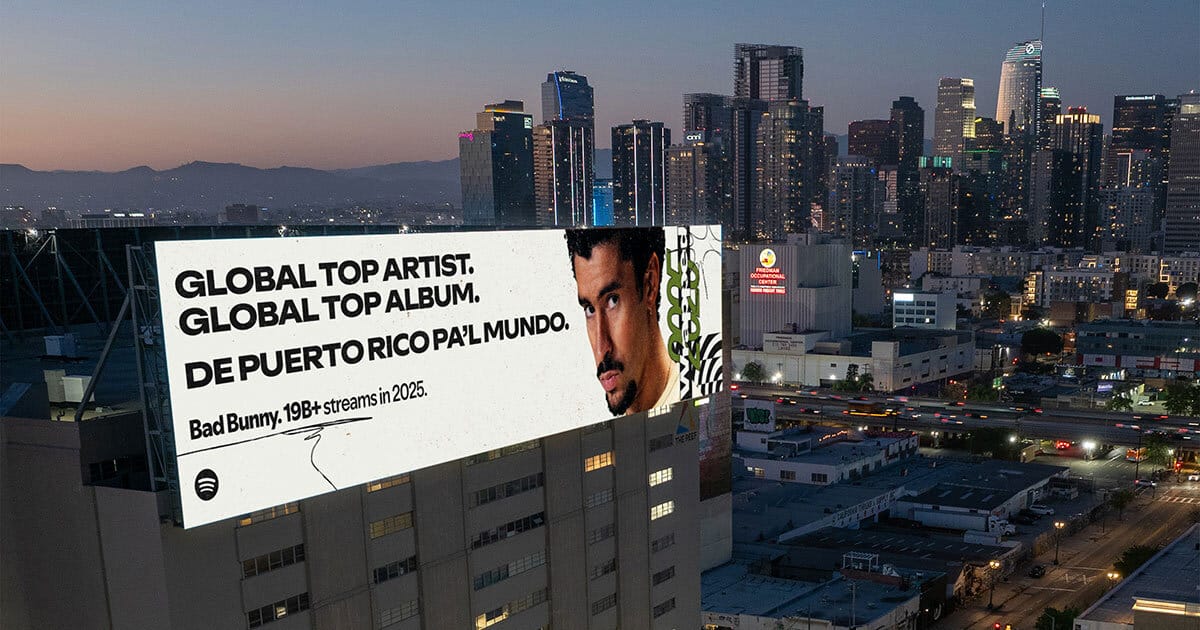
Spotify Wrapped went analog this year. After getting slammed in 2024 for overusing AI, they rebuilt around mixtape culture—handmade aesthetics, cutouts, black and white with pops of color.
Last year they stripped out top genres and served up an AI podcast nobody wanted. Users revolted.
So they fixed it. Brought back genres. Added top albums for the first time. Introduced Clubs, Listening Age, and Wrapped Party where you compete with mates over who's the biggest superfan.
The only AI left is Listening Archive. Everything else is human-designed.
Why it matters: In a year where every brand is racing to bolt AI onto everything, Spotify went the other direction. They listened, admitted the mistake without saying it, and fixed it.
Bad Bunny topped the charts for the fourth time. Wrapped is back to doing what it does best: making 700 million people share their questionable taste.
Brand Watch - MassiveMusic

MassiveMusic spent 25 years shaping how brands sound. Then looked at their own brand and realized it was a mess.
After pulling a stack of specialist services under one roof, they needed an identity that could hold the range without flattening it. Koto built them one around "New Dimensions in Sound"—a frame that connects everything they now do.
The identity doesn't try to look musical in some obvious way. It makes sound visible. Gradients pulse. Shapes react like they're responding to bass. The motion system is generative, not canned, so the brand stays alive wherever it lands.
And the website proves it works. Most rebrands lose their edge online. This one gets sharper. Everything renders live—fast, responsive—so MassiveMusic can move at B2B speed without killing the soul of the thing.
Why it works: they treated this like a translation job, not a facelift. If your product is emotion through sound, your brand needs to feel like that too.
Lento Vibes
A bit of random inspo from around the grounds:
Welcome to Advertising’s Neuro Era: Neuroscience-backed marketing is no longer theory—it’s outperforming traditional creative across recall, emotion, and engagement. The Drum breaks down how brands can plug in. 👉 Read the insights
Online Black Friday Breaks Records: Shoppers chased tech deals and personalized offers, driving a record-breaking online Black Friday—proving tailored promos still win. 👉 See the numbers
Apple Turns Campus Into a Musical: Apple’s new film brings accessibility to center stage through a joyful, high-energy campus musical—celebrating inclusive tech in true Apple style. 👉 Watch the film
Cooking Apps Find Their Secret Ingredient: Recipe publishers are turning to app-based ecosystems—combining personalization, subscriptions, and community to stay relevant in a crowded food content world. 👉 See what’s cooking
Callaway Tees Up Its First Brand Campaign: Golf’s top gear brand takes a big swing with its debut brand campaign—spotlighting confidence, connection, and the joy of the game. 👉 See the campaign
Twitch Wraps a Record Year: Twitch’s 2025 recap shows 900 million hours watched—creators like Kai Cenat and Ironmouse driving another landmark year for live streaming. 👉 Check the recap

You can always reach me directly by emailing [email protected] or simply by replying to this email.
I’d love to hear your questions, thoughts, or any ideas you might have. Thanks again for subscribing! I’m stoked to see where this will take us.
 | Tom Mackay Let’s connect on Linkedin |